
Colorado · Denver
Rent-to-Own Homes in Denver, CO: A Smarter Path for First-Time Buyers
Denver's median home is around $600,000. The median household income is around $95,000. That gap is the reason most first-time Denver buyers eventually consider rent-to-own — and it's also the reason Ownify exists. As a Mortgage Loan Originator licensed in Colorado (NMLS #2723220), I want to walk you through what rent-to-own actually means in Denver, how it stacks up to the alternatives, and why fractional homeownership is the structurally smarter answer for most buyers in your situation.
Quick answer. Rent-to-own in Denver, CO is a lease-option contract — you rent a home for 1–3 years with the right (not obligation) to buy at a pre-agreed price, paying a non-refundable option fee of 1–5% of the purchase price upfront (roughly $6,000–$30,000 on a Denver-median $600,000 home). For most first-time Denver buyers, Ownify Fractional Ownership is structurally cleaner: you own from day one, your share appreciates pro-rata, and you put down as little as 2%.
The setup
Why Denver buyers consider rent-to-own in the first place
Denver's price-to-income ratio sits around 6.3x, well above the national norm of 5x. The Mile High City has been one of the country's least-affordable major metros since the late 2010s, and even with the cooling that began in 2024, the structural problem remains: prices outran incomes for long enough that the down-payment math broke for an entire cohort of would-be first-time buyers.
The path most Denver first-time buyers know about looks like this: save 5–10% over 3–5 years, qualify for an FHA loan, hope nothing goes wrong with the credit profile in the meantime, hope home prices don't run further away while you save. For households earning $75,000–$95,000, that path is genuinely difficult on a $600,000 home. Saving $30,000–$60,000 in down payment plus closing costs while paying Denver rents is a multi-year commitment, and most people give up partway through.
That's the gap rent-to-own is designed to fill. Several legitimate Denver operators run lease-option programs — and we'll cover how those compare in a moment. The thing most buyers don't know is that there's a structurally different alternative, designed specifically for this exact situation, and it's available right now in metro Denver: Ownify Fractional Ownership, backed by Ownify's Colorado Home Fund.
The basics
How rent-to-own works in Colorado
Two contract structures dominate Colorado rent-to-own, and the distinction matters.
A lease-option gives you the right (not obligation) to buy after a defined rental period — usually 1–3 years. You pay an upfront option fee (typically 1–5% of the home's agreed purchase price, non-refundable) plus a monthly rent that may or may not include a small credit toward your future down payment. If you decide not to buy, you walk away. The option fee and accumulated rent credit are forfeit.
A lease-purchase is stricter: you're contractually obligated to buy at the end of the lease term. If you can't qualify for the mortgage when the term ends — credit hit, job change, life event — you're in breach. Most Colorado real-estate professionals steer first-time buyers away from lease-purchase agreements specifically.
The mechanics in Colorado are similar to what you'll see in any other state. What's specifically Colorado about it is what's also available: CHFA, metroDPA, and Ownify's Colorado Home Fund — which together create a meaningfully different choice architecture than buyers face elsewhere.
On the ground
How the available approaches compare
Several legitimate operators serve Denver buyers who would otherwise be locked out of homeownership. Each has its place. To make a clean decision, it helps to group them by how the underlying ownership structure works, because that structure determines almost everything else — equity, exit terms, alignment of incentives.
Approach 1: Traditional lease-option (most local Denver operators)
This is the classic rent-to-own — a private seller or local operator offers a home for lease with an option to purchase later. You're a tenant. The seller stays on title. You pay a non-refundable option fee, you pay above-market rent, and you maintain the home as if you owned it. If you exercise the option at the end of the lease, you transition to buying with a traditional mortgage. If you don't, the seller keeps everything you've put in and re-rents the home.
This approach has been around for decades and continues to serve real Denver buyers. It works best when the buyer has a temporary, fixable problem — recent credit damage, a one-time income disruption — and a specific home they want to land in while they fix it.
Approach 2: Lease with right to purchase (institutional)
National programs like Home Partners of America (and its successor entities) operate at scale: an institutional fund buys homes that approved residents select, then leases them with a right to purchase later at pre-defined annual price increases. The structure is more standardized than private lease-options and the consumer-protection posture is better. The trade-off is that the institutional terms — pricing escalators, renewal terms, fees — are set by the fund, not negotiable.
Approach 3: Fractional ownership (Ownify)
Ownify Fractional Ownership is fundamentally different. You don't rent and then maybe buy. You own from day one. Specifically:
- An LLC is formed to hold title to a single-family home you select
- The LLC issues 10,000 shares ("bricks")
- You buy 200 bricks (2%) at move-in — that's your down payment
- Ownify and the Colorado Home Fund co-invest in the remaining 9,800 bricks
- You live in the home as the sole occupant, paying rent on the bricks you don't yet own and buying additional bricks each month — up to 1,000 more over five years
- At year five, you have the option to qualify for a conventional mortgage and buy out the investor bricks at fair market value, or to exit cleanly and sell back your bricks
You're on title from day one. Your share appreciates with the home, pro-rata. Major repairs are shared with co-investors. There's no non-refundable option fee — the 2% down is your equity, not a fee. And the capital backing the structure is Denver-specific: deployed by investors who selected Colorado as their target market.
The case
Why Ownify is the smarter Denver path
Six structural reasons fractional ownership beats traditional rent-to-own for most Denver first-time buyers:
- You're an owner from day one, not a tenant. Your name is on title via the LLC. That changes everything downstream — appreciation, tax treatment, exit terms, what happens if life changes. In rent-to-own, you don't own anything until you exercise the option; most renters never do.
- Your equity grows with the home. If a Denver home you co-own goes up 5% in a year, your share goes up 5%. In rent-to-own, the pre-agreed purchase price is locked at signing.
- No non-refundable option fee. Your 2% down payment is your equity. If you exit, you sell back your bricks at fair market value. In rent-to-own, the option fee is gone whether or not you buy — typically $6,000–$30,000 at Denver prices.
- Repairs are shared with co-investors. If the HVAC fails, Ownify and its investors share the burden pro-rata with you. In rent-to-own, you typically pay all maintenance as if you owned the home — while you don't.
- Aligned incentives. Ownify and the Colorado Home Fund only succeed if you do — we're co-investors in your home. In a traditional rent-to-own, the seller does best if you don't exercise the option, because they keep the option fee and the home.
- Colorado-specific capital. The Colorado Home Fund is a dedicated pool of investor capital deployed for Denver-area first-time buyers. The math at Denver's price points only works because that capital exists.
The Colorado Home Fund: Denver-specific capital for Denver buyers
Most rent-to-own programs source capital from individual sellers or generic institutional pools. Ownify's Colorado Home Fund is different. It's a dedicated investment vehicle through which accredited and institutional investors fund first-time-buyer fractional purchases specifically in Colorado. The Fund's economics are aligned with the buyer's economics: the Fund earns when home values rise and the buyer earns proportionally too.
Practically, this means a Denver buyer can put 2% down on a $600,000 home — about $12,000 — and own a real share from move-in, because the Fund covers the rest. Check your eligibility in under three minutes.
Consumer protections
What Colorado law actually requires
One piece of context Denver buyers should know: Colorado has weaker statutory consumer protection for rent-to-own contracts than many other states. North Carolina, for example, has dedicated rent-to-own statutes (Chapters 47G and 47H of the General Statutes) that require contract recording with the county Register of Deeds, mandatory disclosures, and treble-damages exposure for non-compliant sellers under unfair-trade-practice law.
Colorado has no equivalent dedicated framework. Colorado rent-to-own contracts are governed by:
- General Colorado contract law — the contract itself defines most rights and remedies
- Title 38 of the Colorado Revised Statutes — particularly C.R.S. § 38-35-126 for installment land contracts, which imposes some disclosure requirements
- Colorado Consumer Protection Act (Title 6) — provides remedies for unfair or deceptive trade practices, but it's a general statute rather than rent-to-own-specific
Practical takeaway: the contract itself is doing more legal work in Colorado than it would in a state with a dedicated framework. Read every clause yourself, or have a Colorado-licensed real estate attorney read it. The lighter regulatory framework is a real reason to favor structures with built-in alignment — like fractional ownership — over structures whose terms are entirely seller-defined. This is not legal advice; for guidance on your specific contract, consult a Colorado-licensed real estate attorney.
Other options
CHFA, metroDPA, and where they fit
Before any first-time Denver buyer commits to either rent-to-own or Ownify Fractional, they should know what conventional financing assistance is available — and what it can and can't do.
Our guide to Colorado first-time home buyer programs walks through every CHFA product, the county income and purchase-price limits, and what each program is actually worth.
Colorado Housing and Finance Authority (CHFA)
CHFA's flagship mortgage paired with CHFA's Down Payment Assistance grant offers up to 5% of the loan amount in grant assistance for income-qualified buyers. On a $600,000 home, that's about $30,000 — meaningful but not enough on its own to bridge a Denver down-payment gap. CHFA program details.
metroDPA (metro Denver region)
metroDPA serves Adams, Arapahoe, Boulder, Denver, Douglas, Jefferson, and Weld counties — the 7-county metro Denver region. It offers a 30-year fixed-rate mortgage paired with up to 6% of the first mortgage loan amount as down payment assistance, structured as a 3-year forgivable second mortgage at zero interest with no repayment requirement if you remain in the home. metroDPA program details.
The DPA-stacking gap on Denver homes
Stacking CHFA + metroDPA + an FHA first mortgage on a $600,000 Denver home gets a typical buyer to about $30,000–$40,000 in combined assistance. That's real money, and for buyers who fully qualify, the conventional path may still be the right one. But it doesn't fully bridge the gap on Denver's median price — most buyers still need $25,000–$40,000 of their own savings at closing. For first-time buyers who don't have that level of savings, who exceed the income caps, or who'd rather skip the DPA-stacking complexity altogether, Ownify Fractional starting at 2% down ($12,000 on a $600,000 home) is the cleaner alternative.
If the traditional DPA-stacked path is right for you and you'd like to start a pre-qualification with Ownify directly (Frank is the licensed MLO on file, NMLS #2723220), apply for a mortgage with Ownify.
Side-by-side
The math on a $600K Denver home
| Feature | Traditional rent-to-own (lease-option) | CHFA + metroDPA + FHA | Ownify Fractional |
|---|---|---|---|
| Cash up front | $6K–$30K option fee + first month + deposit (typically $15K–$40K) | $21,000 (3.5% FHA) − ~$36K combined CHFA + metroDPA = ~$25K–$40K out of pocket + closing costs (most still need savings on top of stacked DPA) | ~$12,000 (2% down) + closing costs |
| Ownership at move-in | None — you're a tenant | 100% with mortgage | ~2–10% via LLC; on title from day one |
| Equity build | Limited to optional rent credit (often zero) | Standard mortgage paydown + 100% appreciation | Pro-rata appreciation + buy-back additional shares over 5 years |
| If Denver appreciates 5% | Seller captures the upside (purchase price was locked) | You capture the upside | You capture your share of the upside |
| Repair burden | You — paying like a renter, maintaining like an owner | You — but you own the asset | Shared with co-investors |
| If life changes (job loss, etc.) | Default voids your option; you forfeit option fee + rent credit | Standard mortgage protections; can sell or refinance | Sell back to LLC at fair market value |
| Income / qualification limits | Set by seller | CHFA caps + metroDPA caps apply | Standard credit (660+); no income cap |
The takeaway for most first-time Denver buyers: Ownify Fractional has the lowest cash-at-close, the cleanest ownership posture, and the most aligned incentives. CHFA-stacked traditional financing is the right choice for buyers who fully qualify and have enough additional savings to cover the residual gap. Traditional lease-option rent-to-own remains a fit for specific buyer scenarios but for the median first-time Denver buyer, the math meaningfully favors fractional ownership.
Where to look
Denver neighborhoods that pencil for first-time buyers
Where you target inside metro Denver — and how you frame the trade-offs — matters as much as the financing structure. Five sub-markets that consistently work for first-time buyers in 2026:
- Sloan's Lake / Edgewater border: $475K–$650K for a smaller bungalow or townhome. Walking distance to the lake, fast-improving food scene, 12 minutes to downtown.
- Berkeley / Tennyson: $500K–$700K. Mature trees, walkable retail on Tennyson Street, some of the most stable appreciation in metro Denver over the last 5 years.
- Park Hill: $550K–$800K (varies sharply by sub-block). Established neighborhood character, City Park and Denver Zoo nearby.
- Athmar Park / Baker: $400K–$525K — closer to the metro median, transitioning, more diverse housing stock. Best fit for first-time buyers prioritizing entry price over square footage.
- Aurora (close-in, Aurora Hills / Hoffman Heights): $375K–$500K. Wholly different feel from central Denver, larger lots, real first-time-buyer affordability with a 25-minute commute to downtown.
For deeper neighborhood analysis with neighborhood-by-neighborhood pricing, school context, and commute math, see the Denver first-time buyer guide. Also nearby: Aurora, Lakewood, and Arvada. If you're comparing Denver to other Ownify markets, the Raleigh rent-to-own breakdown and Durham rent-to-own breakdown cover the Triangle.
Most first-time Denver buyers searching for rent-to-own end up choosing Ownify Fractional once they see the math.
FAQ
Frequently asked questions
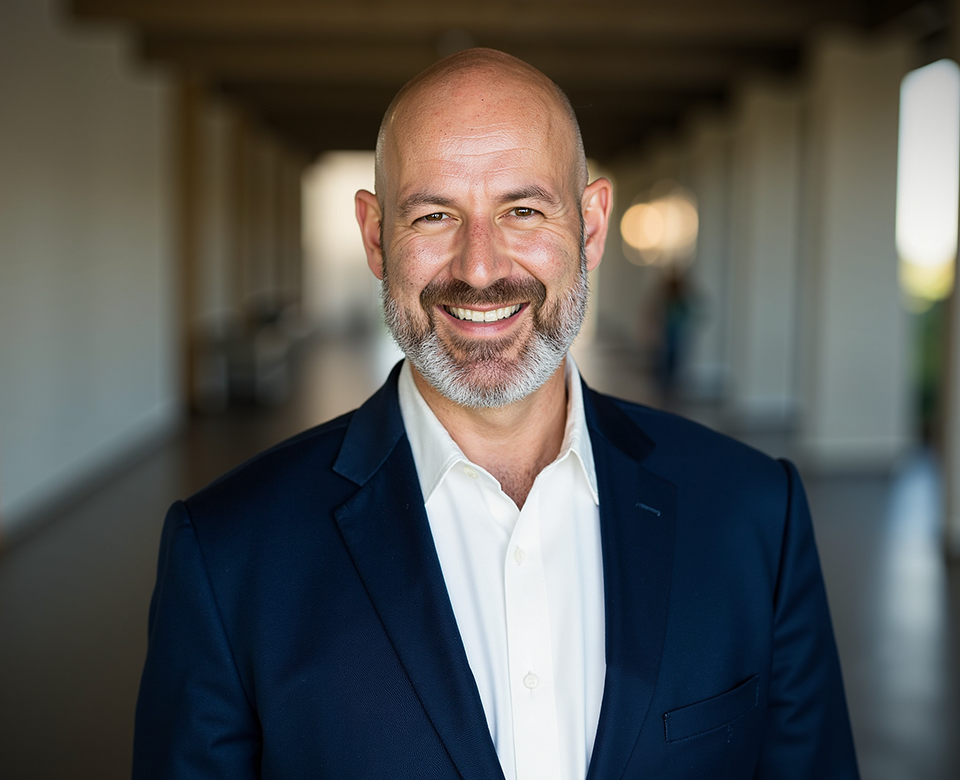
By Frank Rohde · Founder & CEO, Ownify
Frank Rohde is Founder and CEO of Ownify, the leading fractional homeownership platform in the U.S. He also manages the Ownify Home Funds, co-investing with qualified first-time homebuyers. Prior to Ownify, Frank was CEO of Nomis Solutions, the leading mortgage-pricing engine globally. He's a 3x fintech founder and entrepreneur with deep experience in data science, machine learning, real estate, and pricing. Prior to Nomis, Frank was Vice President of Product Management at FICO — the maker of the credit score. Frank started his career at Oliver Wyman after graduating with a BS in Finance and Real Estate from The Wharton School at the University of Pennsylvania. Frank is a CO-licensed Mortgage Loan Originator (NMLS 2723220). Watch Frank's TEDx talk on how we can help young people become homeowners.
About this page
Data and program details accurate as of . Down payment assistance programs change frequently — verify current eligibility, income caps, and funding directly with CHFA, metroDPA, or your lender. This page is informational and is not legal, tax, or financial advice. Frank Rohde is a Mortgage Loan Originator licensed in Colorado and North Carolina (NMLS #2723220); for advice specific to your situation, consult a Colorado-licensed MLO or real estate attorney.
Sources: CHFA Down Payment Assistance, metroDPA, Redfin Denver Housing Market.